Introduction: Full Stack Java Is Becoming Smarter
Full Stack Java development is no longer only about writing backend code, creating web pages, and connecting databases. AI is changing how developers learn, build, test, debug, and improve applications. For students and freshers, this change can feel confusing. Some people think AI will replace developers. Others believe AI will create better opportunities for skilled developers. The truth is simple. AI will not remove the need for strong developers, but it will change what companies expect from them.
In 2026, companies want developers who can build complete applications and understand how AI improves speed, accuracy, and user experience. That is why Full Stack JAVA with DSA & AI is becoming an important career path. It connects Java full stack development, Data Structures and Algorithms JAVA, and AI-powered thinking into one practical direction.
What Is Full Stack Java Development?
Full Stack Java development means building both the frontend and backend parts of a web application using Java-based technologies and related tools. The frontend is what users see, such as forms, dashboards, buttons, menus, and pages. The backend is where the main logic works, such as login validation, API processing, data storage, payment flow, reports, and business rules.
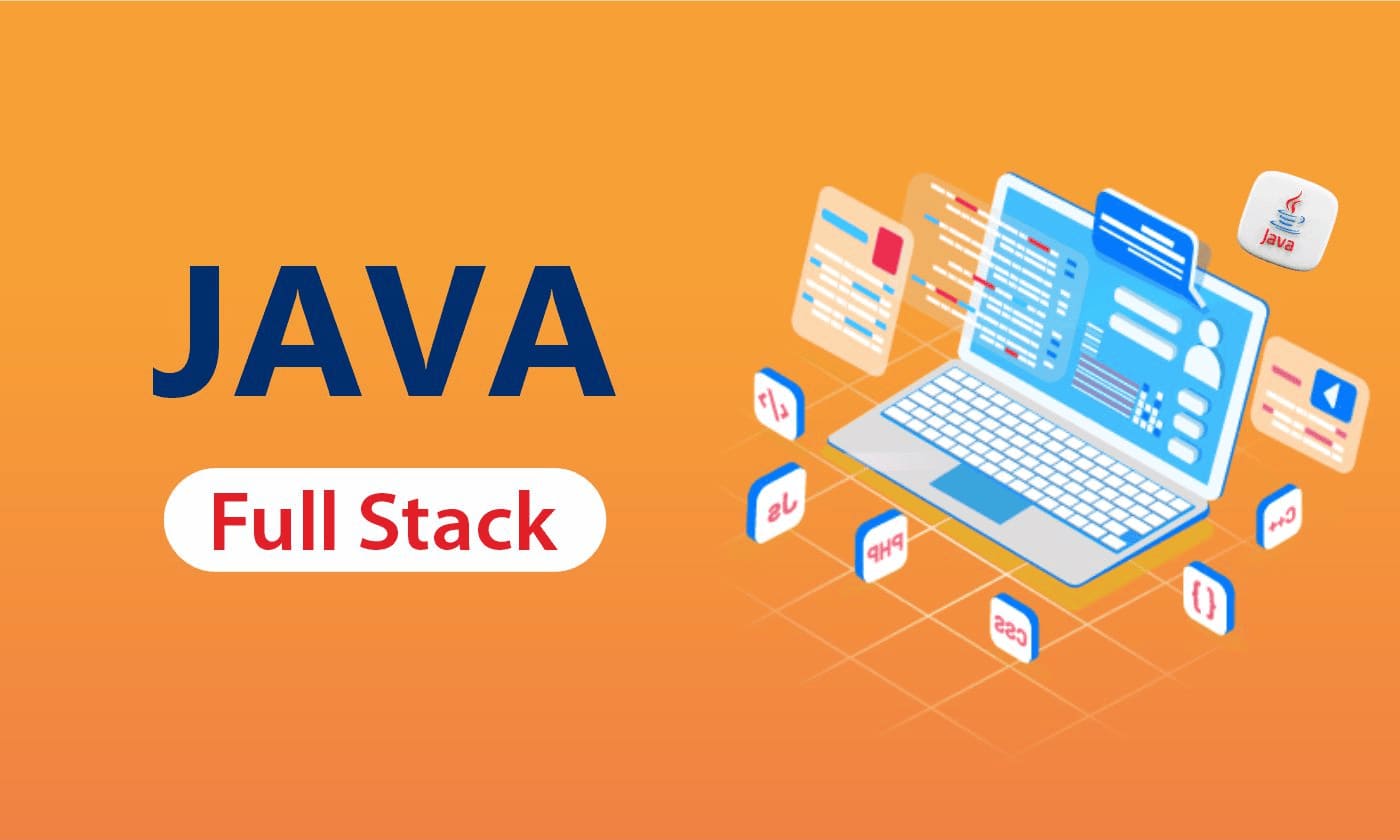
A Java full stack developer usually works with Core Java, Spring Boot, REST APIs, Microservices basics, SQL, frontend technologies, Git, debugging, and project deployment concepts.
When AI is added to this path, the developer learns how to make applications smarter. For example, an education portal can suggest courses, a job portal can match resumes, and a support system can use a chatbot. This is where a Java Full Stack Developer with AI becomes more useful.
Why AI Is Changing the Development Process
AI is changing full stack development because it improves productivity. Developers can use AI tools to understand errors, generate basic code structures, create test cases, prepare documentation, summarize long requirements, and explore better logic.
But AI does not replace development knowledge. A tool can suggest code, but the developer must verify whether it is correct, secure, scalable, and suitable for the business requirement. Without Java fundamentals, database understanding, and DSA knowledge, a learner may blindly trust AI output.
This is why AI is not a shortcut. It is an amplifier. It helps skilled developers work faster, but it cannot build strong judgment for someone who skips fundamentals.
Why Java Still Matters in the AI Era
Many beginners ask whether Java will remain useful when AI tools are growing. Java is still one of the strongest choices for enterprise development. It is used in banking, insurance, healthcare, telecom, logistics, education platforms, e-commerce, and large business systems.
Java is trusted because it supports security, scalability, maintainability, and long-term project stability. Spring Boot makes backend development faster. Microservices help companies build large applications in smaller independent services. APIs allow Java applications to connect with mobile apps, web apps, payment systems, and AI services.
AI may become part of application workflows, but every serious product still needs authentication, authorization, backend logic, database design, validation, error handling, and reporting. Java supports these needs strongly. That is why Full stack java Training is still valuable when it is combined with AI awareness.
How AI Improves Full Stack Java Projects
AI can improve Java full stack projects in practical ways. A normal application stores and displays data. An AI-enabled application can understand patterns, suggest actions, answer questions, and automate decisions.
For example, a learning management system can recommend courses based on a student’s progress. A hospital system can help users find suitable departments based on symptoms. A job portal can compare resume skills with job descriptions. An e-commerce system can recommend products based on browsing behavior. A business dashboard can summarize monthly performance in simple language.
These features make projects more relevant for 2026 hiring. Recruiters like candidates who can explain how AI adds value to a real business problem.
The Role of DSA in an AI-Driven Java Career
Some beginners think DSA becomes less important because AI can generate code. This is a dangerous assumption. Data Structures and Algorithms JAVA is still important because it teaches problem-solving.
AI may provide a possible solution, but the developer must understand whether it is efficient. DSA helps learners compare approaches, reduce unnecessary loops, handle data properly, and solve coding round questions.
Recruiters still use DSA to check logic. They may ask questions on arrays, strings, searching, sorting, hashing, stacks, queues, recursion, trees, and basic dynamic programming. A learner who depends only on AI without practicing DSA may struggle in interviews.
A strong developer uses AI as support, not as a replacement for thinking. This mindset makes a candidate more reliable.
Skill Gap: What Beginners Must Understand
The biggest skill gap is between learning concepts and applying them. Many students know Java definitions but cannot build a working API. They know SQL commands but cannot design tables for a project. They add AI to their resume but cannot explain one meaningful AI use case.
Companies expect practical understanding. They want candidates who can explain project flow, database design, API connection, validation logic, exception handling, and user roles. In AI-enabled projects, they also expect clarity on why AI is used and how it improves the application.
This is why a full stack with AI Course should not only teach tools. It should help students build complete projects, practice DSA, understand AI use cases, and prepare for interviews.
Market Demand in India
India’s technology industry is moving toward value-driven hiring. Companies are focusing more on skills, project ability, and AI-readiness. Full stack roles remain important because businesses need developers who understand complete application flow.
AI adoption is moving from experiments to real business use. This means companies need developers who can connect existing systems with intelligent features. Freshers who learn only basic coding may face more competition. Learners who build full stack projects with Java, DSA, and AI awareness can stand out better.
For students in Hyderabad, Bengaluru, Pune, Chennai, Mumbai, Gurgaon, and growing Tier-2 cities, this creates a strong opportunity.
Career Roadmap for Beginners
A beginner should not jump directly into AI tools. The roadmap should be practical.
Start with Core Java. Learn variables, loops, methods, classes, objects, OOP, collections, exception handling, and basic file handling. Then practice Data Structures and Algorithms JAVA daily. Begin with arrays and strings before moving to advanced topics.
Next, learn SQL and database design. Understand tables, relationships, joins, primary keys, foreign keys, and query writing. After that, learn frontend basics like HTML, CSS, JavaScript, and a frontend framework.
Then move to Spring Boot. Learn REST APIs, controllers, services, repositories, validation, exception handling, and database connectivity. Build complete projects with login, dashboards, CRUD operations, reports, search, filters, and roles.
After this, add AI features. Keep them simple and useful. Finally, prepare resume points, GitHub projects, mock interview answers, and DSA revision.
Projects That Show AI-Ready Java Skills
Projects are the best way to prove learning. A beginner can build an online course platform with AI-based course suggestions. A job portal can include resume keyword matching. A hospital appointment system can include a basic chatbot. An employee dashboard can generate simple performance summaries. An e-commerce application can include product recommendations.
These projects should not be built only for display. They should include proper frontend pages, backend APIs, database tables, authentication, validation, error handling, and documentation.
Recruiters do not expect freshers to build advanced AI systems. They expect clear thinking. If a candidate can explain what problem AI solves, how the application works, and how data flows, the project becomes more impressive.
Recruiter Expectations in 2026
Recruiters are becoming more careful. They do not want candidates who only completed a course. They want candidates who can apply what they learned.
For Java full stack roles, they may ask about OOP, collections, SQL, Spring Boot, REST APIs, Microservices basics, debugging, and project architecture. For DSA, they may ask logic-based coding questions. For AI awareness, they may ask how AI tools improve development or how AI features can be added to an application.
Many candidates fail because they cannot explain their own projects. Others fail because their resume has too many technologies without depth. A job-ready candidate explains fewer skills with more confidence.
Salary Scope and Career Growth
A fresher can start as a Java Developer, Software Engineer Trainee, Junior Full Stack Developer, Backend Developer, API Developer, or Web Application Developer. With experience, the path can move toward Full Stack Engineer, Spring Boot Developer, Microservices Developer, Senior Java Developer, Cloud-ready Java Developer, AI-integrated application developer, Technical Lead, or Solution Architect.
Salary depends on skill depth, city, company, projects, communication, and interview performance. AI awareness can improve long-term value when combined with strong Java, DSA, SQL, and project confidence.
The first salary is important, but long-term growth matters more. Developers who keep upgrading with AI, cloud basics, DevOps awareness, and system design can create stronger career stability.
How NareshIT Supports This Learning Path
NareshIT helps learners follow a structured path instead of learning randomly. A guided java full stack course can help students understand what to learn first, how to practice, where to use AI, and how to prepare for interviews.
The training approach focuses on real-time trainers, practical examples, lab practice, mentor support, project guidance, doubt clarification, resume preparation, and placement-focused learning. For students in Hyderabad, especially around Ameerpet, and for online learners across India, structured Full stack java Training can reduce confusion and improve career confidence.
FAQs
Is AI replacing Full Stack Java developers?
AI is not replacing skilled developers. It is changing how they work. Developers who know Java, DSA, projects, and AI tools can become more productive.
Is Full Stack JAVA with DSA & AI good for freshers?
Yes. It gives freshers a strong mix of development, problem-solving, and future-ready AI awareness.
Do I need DSA if I use AI tools?
Yes. DSA helps you understand logic, clear coding rounds, and verify AI-generated solutions.
What AI skills should Java full stack beginners learn?
Beginners should learn AI tool usage, chatbot use cases, AI APIs, smart search, recommendations, and automation ideas.
Can non-IT students learn this path?
Yes. Non-IT learners can start with fundamentals and grow through regular practice, projects, and guided training.
What makes a Java Full Stack Developer with AI job-ready?
Strong Java basics, Spring Boot, SQL, frontend skills, DSA practice, project explanation, Git usage, and AI use-case clarity make a candidate job-ready.
Conclusion: The Future Belongs to AI-Ready Developers
AI is changing the future of Full Stack Java development by making applications smarter and developers more productive. But it is not removing the need for strong fundamentals. In fact, the value of fundamentals is increasing because developers must understand, verify, and improve AI-supported work.
Full Stack JAVA with DSA & AI gives learners a balanced path. Java builds the application foundation. Full stack skills create complete project ability. DSA builds logic and interview confidence. AI awareness prepares learners for modern product development.
Students who start now can build better projects, stronger resumes, and clearer interview answers. If you want to move from beginner confusion to career-ready confidence, NareshIT’s Full Stack JAVA with DSA & AI training can help you build practical skills for the future of software development.
 +91 8179191999

 +91
8179191999
+91
8179191999

.jpg)




.png)