.png)
Next Batch : Invalid Date
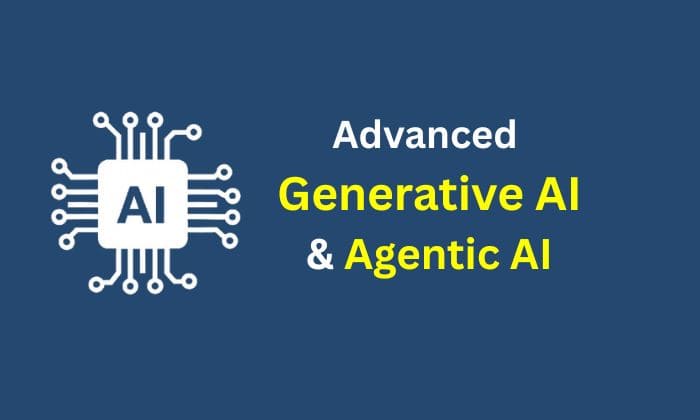
Artificial Intelligence is no longer limited to answering questions or generating content. Today, companies want AI systems that can plan, take action, use tools, check results, and complete tasks with less manual support. This shift is making agentic workflows one of the most discussed concepts in modern AI projects.
For students and freshers, this is a big career signal. Learning only basic AI tools may not be enough in the future. Recruiters are slowly looking for candidates who understand how AI applications work in real business processes. That is why learners are showing more interest in Generative AI using Python, Generative AI Training, and practical AI project development.
Agentic workflows are becoming popular because they help AI move from simple response generation to task execution. This makes AI systems more useful for businesses, support teams, developers, trainers, and automation projects.
An agentic workflow is a process where an AI system does more than give one answer. It follows a goal, breaks the task into steps, uses available tools, checks information, and completes the work in a structured way.
For example, a normal AI chatbot may answer, “Here is a study plan.” But an agentic AI workflow can create the plan, divide it into daily tasks, generate practice questions, check progress, suggest revision topics, and update the learning path based on performance.
This is the major difference.
A normal AI system responds. An agentic system works through a process.
In AI projects, agentic workflows usually include planning, reasoning, tool usage, memory, data access, task execution, and result checking. When these parts are designed properly, the AI system becomes more practical and business-ready.
Agentic workflows are becoming popular because companies want AI systems that can solve real problems, not just generate text. Businesses have repetitive tasks, support requests, data updates, reports, research work, customer questions, and internal operations that need faster execution.
Generative AI can understand instructions. But when it is combined with agentic workflows, it can complete multi-step tasks. This makes AI more valuable.
For example, in a customer support project, an AI agent can understand the complaint, check the knowledge base, ask for missing details, create a response, and forward complex cases to a human team. In a learning platform, an AI agent can guide students, answer doubts, create quizzes, and suggest the next lesson.
This kind of practical use is the reason many learners are choosing a Generative AI Course or Generative AI Certification Course to understand how these systems are built.
Agentic workflows work through a clear process. First, the AI receives a goal or instruction. Then it understands what needs to be done. After that, it breaks the work into smaller steps. It may use tools, APIs, documents, databases, or external systems to collect information or perform actions.
Once the task is completed, the AI checks whether the output matches the requirement. If needed, it improves the result.
This process is useful because many real-world tasks are not completed in one step. A project may need research, comparison, summarization, decision-making, formatting, and reporting. Agentic workflows help manage this complexity.
Python plays an important role here. With Generative AI using Python, learners can connect AI models with applications, create workflows, manage user inputs, call APIs, handle data, and build intelligent automation systems.
Python is one of the most useful languages for Generative AI and agentic AI projects. It is simple to learn, easy to integrate, and widely used in AI development. Python helps learners connect AI models with tools, create backend logic, manage data, and build automation flows.
For freshers, Python is a strong starting point because it supports both learning and project building. A learner can start with basic Python, then move into prompt engineering, APIs, AI models, workflows, and agent-based applications.
This is why many students search for Generative AI using Python Course Online. They want to learn how AI works practically, not just theoretically.
A good Generative AI Training program should help students understand how to use Python for real AI tasks like chatbot creation, document summarization, AI assistants, workflow automation, and project integration.
Education is one of the best areas where agentic workflows can create impact. Many students struggle because they do not know what to learn first, how to practice, where they are weak, or how to prepare for interviews.
An agentic learning assistant can solve this problem. It can understand a student’s goal, create a roadmap, generate topic-wise practice tasks, explain difficult concepts, and suggest revision plans. It can also help with quizzes, assignments, resume preparation, and interview practice.
For example, a fresher learning Generative AI using Python can use an agentic workflow to plan daily lessons, practice Python tasks, revise prompts, build mini projects, and prepare for interview questions.
This makes learning more personalized and practical. Instead of giving the same content to every student, AI can support each learner based on their progress.
Support systems are another area where agentic workflows are becoming powerful. Traditional support systems depend heavily on human teams. When the number of queries increases, response time becomes slow. Customers may get repeated answers, delayed solutions, or incomplete support.
Agentic AI can improve this process.
A support agent can understand the user’s issue, search the knowledge base, ask follow-up questions, generate a useful answer, and escalate the issue when required. This helps companies improve customer experience and reduce manual workload.
For training institutes, agentic support systems can answer questions about courses, batches, prerequisites, projects, placement support, and certification. For software companies, they can help employees with internal tools, documentation, and process-related queries.
This is why agentic workflows are becoming common in AI projects across education, IT services, customer support, HR, and operations.
Many students learn AI at a basic level. They use tools, generate content, and understand simple prompts. But companies expect more practical skills.
Recruiters want to know whether a candidate can build a useful AI application. They may ask how the AI system handles user input, how it connects with data, how it performs tasks, how it checks output, and how it improves user experience.
This creates a skill gap.
College learning often focuses on theory. Companies expect implementation. A certificate may help, but projects and practical understanding create stronger confidence.
That is why an AI Course for Beginners or AI Course for Freshers should include hands-on training. Students should learn not only what Generative AI is, but also how agentic workflows can be used in real projects.
Projects are the best way to understand agentic workflows. Freshers should build projects that show real problem-solving ability.
Some useful project ideas include an AI study planner, an interview preparation assistant, a course enquiry chatbot, a resume improvement assistant, a customer support AI agent, a document summary workflow, and a task automation assistant.
These projects help students understand how to collect input, process information, generate output, and improve responses. They also help learners explain their skills clearly during interviews.
For example, a resume assistant can review a resume, identify weak sections, suggest improvements, generate better bullet points, and provide interview preparation tips. This is more impressive than a simple chatbot project because it shows workflow thinking.
Recruiters are becoming more practical in AI-related interviews. They may not ask only definitions like “What is Generative AI?” They may ask what projects you built, what problem your project solves, how Python was used, how the workflow was designed, and how the output was tested.
Freshers often make the mistake of learning many tools without understanding the project flow. Some candidates also depend only on certificates. But recruiters prefer candidates who can explain logic, workflow, use case, limitations, and improvements.
A job-ready candidate should be able to explain:
What problem the AI project solves
Who will use the system
How the workflow runs
Where Python is used
How the AI response is improved
What future features can be added
This kind of explanation creates trust in interviews.
Agentic workflows are useful for many future roles. Learners can explore career paths such as AI application developer, Python AI developer, AI automation associate, chatbot developer, prompt engineer, AI workflow designer, and Generative AI project developer.
Freshers who understand agentic workflows can stand out because they are not only using AI tools. They are learning how to build AI-powered systems.
This skill is valuable because businesses want automation, faster support, smarter learning systems, better internal tools, and AI-powered productivity. Students who start early can build stronger portfolios and gain better career clarity.
The Best Generative AI Course should focus on practical learning. It should not stop with definitions and tool demos. It should teach Python, prompt engineering, API usage, AI workflows, project development, and real-time use cases.
A strong Generative AI Certification Course should also include mentor support, assignments, interview preparation, and portfolio-building guidance.
For beginners, the course should start with simple concepts and slowly move toward real projects. This helps learners avoid confusion and build confidence step by step.
Students need structured learning, real-time trainer guidance, practical assignments, lab support, project practice, and placement-focused preparation. These elements help learners move from basic understanding to real implementation.
For freshers, this practical approach is important. They need someone to guide them on what to learn, how to practice, how to build projects, and how to present skills in interviews.
A well-planned Generative AI Training program can help learners understand agentic workflows, build AI projects using Python, and prepare for future AI career opportunities.
An agentic workflow is a step-by-step AI process where the system can plan, use tools, perform actions, and complete tasks instead of only giving one response.
They make Generative AI more useful for real projects because they help AI systems complete multi-step tasks, automate work, and support users better.
Python is highly useful because it helps connect AI models, APIs, data, tools, and application logic in practical AI projects.
Yes. Freshers can learn agentic workflows by starting with Python basics, prompt engineering, Generative AI concepts, and simple project-based practice.
You can build AI study planners, support chatbots, resume assistants, interview preparation tools, document summarizers, and task automation systems.
Yes. A certification is useful when it is supported by practical training, project work, mentor guidance, and interview preparation.
Agentic workflows are becoming popular because they make AI systems more useful, practical, and business-ready. They help AI move beyond simple answers and perform structured tasks. This shift is important for students, freshers, working professionals, and companies.
Learning Generative AI using Python can help learners understand how these workflows are built and used in real projects. With the right Generative AI Course, practical training, certification, and project guidance, freshers can build strong AI skills for the future.
The AI field is moving fast. Learners who start early, practice consistently, and build real projects will have a better advantage. This is the right time to learn agentic workflows, strengthen your Generative AI skills, and prepare for AI-powered career opportunities.
 +91 8179191999

 +91
8179191999
+91
8179191999


.png)




.png)