 +91 8179191999

 +91
8179191999
+91
8179191999


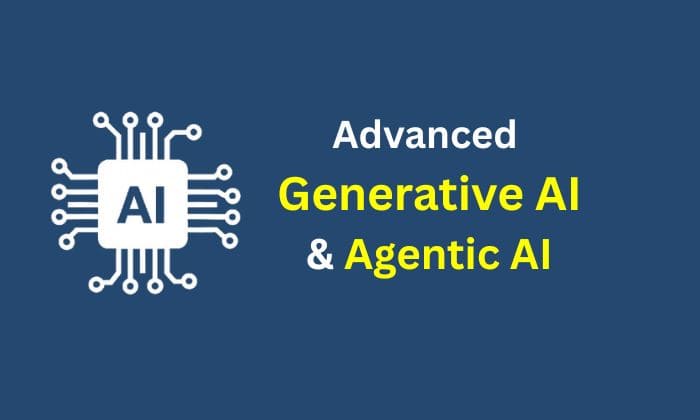
.png)
.png)
Top Skills Needed to Become an AI Agent Developer in 2026
Introduction
AI is no longer used only for writing answers or generating content. In 2026, companies are looking at AI agents that can understand goals, plan steps, use tools, connect with applications, check results, and support real business workflows.
This shift is creating a new career direction: AI Agent Developer.
For freshers, this is a big opportunity. But it also creates confusion. Many learners think using AI tools is enough. In reality, companies need candidates who can build AI-powered systems, not just use AI for simple tasks.
That is why learning Generative AI using Python, AI agents, RAG, tool integration, prompt engineering, and workflow design is becoming important. A good Generative AI Course should help learners understand how AI agents work in real projects and how these skills can be used for career growth.
Who Is an AI Agent Developer?
An AI Agent Developer is someone who builds AI systems that can perform tasks with some level of autonomy. These systems can plan, use tools, access data, communicate with users, and complete multi-step workflows.
For example, a normal chatbot may answer a question. But an AI agent can understand the user’s goal, search documents, call tools, create a response, ask follow-up questions, and take the next action.
AI Agent Developers work on applications like customer support bots, learning assistants, interview practice bots, document analysis systems, automation agents, coding assistants, and business workflow tools.
This role is becoming valuable because companies want AI systems that solve practical problems.
1. Python Programming Skills
Python is one of the most important skills for becoming an AI Agent Developer. It is simple, flexible, and widely used in AI development.
With Python, learners can connect AI models, build workflows, call APIs, process data, manage user inputs, and create backend logic. Python is also useful for building chatbots, RAG systems, local LLM applications, and automation tools.
Freshers should start with Python basics such as variables, functions, loops, classes, file handling, APIs, and error handling. After that, they can move into AI libraries, prompt workflows, and application development.
This is why Generative AI using Python is a strong learning path for beginners.
2. Prompt Engineering
Prompt engineering is the skill of giving clear instructions to AI models. A good prompt can improve the quality of AI responses. A weak prompt can create confusing, incomplete, or wrong answers.
AI Agent Developers should know how to write prompts for role-based agents, task instructions, output formats, reasoning steps, safety rules, and validation.
For example, an AI interview bot needs different prompts for asking questions, evaluating answers, giving feedback, and suggesting improvements. A support bot needs prompts that keep the answer accurate, polite, and within approved information.
Prompt engineering is not only about asking questions. It is about designing instructions that guide AI behavior.
3. Understanding LLMs and Generative AI
An AI Agent Developer should understand how Large Language Models work at a basic level. They do not need to become research scientists, but they should know how LLMs generate responses, where they perform well, and where they may fail.
Important concepts include tokens, context window, temperature, embeddings, hallucinations, model limitations, system prompts, and response quality.
This knowledge helps developers design better AI applications. It also helps them avoid blind trust in AI outputs.
A strong Generative AI Training program should explain these concepts in simple language and connect them with real projects.
4. RAG and Knowledge Retrieval
RAG stands for Retrieval-Augmented Generation. It helps AI applications answer using trusted documents or data instead of depending only on model memory.
This is one of the most important skills for AI Agent Developers.
In real applications, companies do not want AI to guess. They want AI to answer from approved sources such as FAQs, policy documents, course content, manuals, project files, or business records.
To build RAG systems, learners should understand document loading, chunking, embeddings, vector search, hybrid search, retrieval, and response generation.
For freshers, a document question-answering bot is a strong project because it shows practical AI development skills.
5. Vector Databases and Embeddings
AI agents often need to search information by meaning. This is where embeddings and vector databases are useful.
Embeddings convert text into numerical form so that similar meanings can be found easily. Vector databases store and search these embeddings.
For example, if a student asks, “How long does it take to complete this course?” the system should understand that the question is related to course duration, even if the exact word “duration” is not used.
This skill is very useful for learning assistants, support chatbots, internal knowledge bots, and resume search systems.
Students learning through a Generative AI Certification Course should practice at least one project using embeddings and vector search.
6. Tool Integration and APIs
AI agents become powerful when they can use tools. A tool can be a calculator, search system, database, file reader, email system, CRM, calendar, ticketing system, or internal application.
An AI Agent Developer should know how to connect AI with APIs and external tools.
For example, an AI course enquiry bot can fetch batch details. An AI interview bot can save student performance. An AI support agent can create tickets. An AI learning assistant can read course content and suggest revision topics.
This is where Python becomes very useful. Python helps developers call APIs, process responses, and connect AI with real applications.
7. Agent Frameworks
In 2026, beginners should also understand AI agent frameworks. These frameworks help developers build agents, define tasks, manage workflows, and connect tools.
Popular concepts include agents, tasks, tools, memory, orchestration, handoffs, guardrails, and multi-agent collaboration.
Beginners can start with simple role-based agent projects. For example, one agent can research, one can write, and one can review. Later, learners can explore more advanced workflows where agents communicate, check results, and complete complex tasks.
Framework knowledge helps freshers move beyond basic chatbots and build more professional AI applications.
8. MCP and Tool Connectivity
MCP, or Model Context Protocol, is becoming important because AI agents need a structured way to connect with tools and data sources.
AI Agent Developers should understand the basic idea of tool connectivity. They should know how an AI agent discovers tools, sends inputs, receives outputs, and uses the result in a workflow.
For example, a business AI agent may need to read files, search records, check internal data, and prepare a response. MCP-style thinking helps developers understand how AI systems connect with real applications.
This skill is useful for learners who want to build serious agentic AI projects.
9. Workflow Design and Task Planning
AI agents are not just chat systems. They follow workflows.
An AI Agent Developer should know how to break big tasks into smaller steps. This is called task planning. For example, an AI resume assistant may first read the resume, identify weak areas, suggest improvements, rewrite points, and give interview questions based on the resume.
This step-by-step structure makes the system more useful.
Students should learn how to design workflows for learning bots, support bots, interview bots, document assistants, and automation agents.
Good workflow design shows maturity. It also helps candidates explain projects clearly during interviews.
10. Hallucination Control and Validation
Generative AI can sometimes give wrong answers confidently. This is called hallucination. AI Agent Developers should know how to reduce hallucinations.
Important methods include clear prompts, trusted data, RAG, output validation, guardrails, testing, and human review.
For example, an AI support bot should not invent course details or batch timings. It should answer only from verified data. If the data is missing, it should ask for clarification or suggest human support.
Recruiters value candidates who understand accuracy and safety. This skill shows that the learner can build reliable AI applications.
11. Human-in-the-Loop AI
Human-in-the-Loop means keeping human review in important AI workflows. AI can suggest, draft, summarize, or recommend. But a human can approve the final action.
This is important in sensitive areas like hiring, student counselling, finance, legal communication, academic evaluation, and customer support.
AI Agent Developers should know where automation is useful and where human approval is required.
For example, an AI can draft a student response, but a counsellor can approve it before sending. This creates a balance between speed and responsibility.
12. Basic Cloud and Deployment Skills
Building an AI agent is one part. Running it for users is another part.
AI Agent Developers should understand basic deployment concepts such as APIs, backend hosting, environment variables, databases, authentication, logging, and monitoring.
They should also understand the difference between cloud APIs and local LLMs. Some projects may use cloud models. Some may use local models for privacy or offline use.
Freshers do not need to master everything at once. But they should know how an AI project moves from laptop to real users.
13. Security, Privacy, and Responsible AI
AI agents may handle user data, documents, business information, or student details. So security and privacy matter.
Developers should avoid exposing sensitive data. They should understand access control, safe API usage, data handling, and responsible AI limits.
For example, an AI agent should not reveal private student records or confidential company data. It should also avoid unsafe or unsupported answers.
Responsible AI is becoming a core skill. Companies want developers who can build useful systems without creating risk.
14. Communication and Project Explanation
Technical skills are important, but communication is also necessary. Freshers must learn how to explain their AI projects clearly.
Recruiters may ask:
What problem does your AI agent solve?
How does the workflow run?
Where is Python used?
How does the agent use tools?
How does it reduce hallucinations?
How do you test the output?
What improvements can be added later?
A job-ready learner should answer these questions with confidence. This is the difference between a certificate holder and a project-ready candidate.
Projects to Build as an AI Agent Developer
Freshers should build projects that solve real problems. Some useful project ideas include an AI interview practice bot, AI study planner, course enquiry chatbot, resume improvement assistant, document Q&A bot, customer support agent, and task automation assistant.
These projects help learners practice Python, prompts, RAG, tool usage, validation, and workflow design.
A strong portfolio should show not only the final output but also the problem, architecture, tools used, workflow, and improvement plan.
How to Choose the Best Generative AI Course
The Best Generative AI Course should teach practical AI development, not only theory. It should include Python, prompt engineering, LLM basics, RAG, vector search, AI agents, tool integration, MCP basics, guardrails, and project development.
A good Generative AI Certification Course should include mentor support, assignments, lab practice, interview preparation, and portfolio guidance.
For beginners, the course should start with simple concepts and slowly move toward real applications. This helps learners avoid confusion and build confidence step by step.
FAQs
1. What skills are needed to become an AI Agent Developer?
You need Python, prompt engineering, LLM basics, RAG, vector search, APIs, agent frameworks, workflow design, validation, and project development skills.
2. Is Python required for AI agent development?
Python is highly useful because it helps build AI workflows, connect APIs, process data, manage tools, and create real AI applications.
3. Can freshers become AI Agent Developers?
Yes. Freshers can start with Python basics, then learn Generative AI, prompts, RAG, AI agents, and practical projects step by step.
4. What projects should beginners build?
Beginners can build AI interview bots, study planners, resume assistants, document Q&A bots, course enquiry chatbots, and customer support agents.
5. Is Generative AI Certification useful?
Yes. It is useful when the certification includes practical training, Python projects, AI agents, RAG, and interview preparation.
6. How long does it take to learn AI agent development?
The time depends on your current skill level. With regular practice, beginners can start building simple AI agent projects after learning Python and Generative AI fundamentals.
Conclusion
AI Agent Developer is becoming an important career path in 2026 because companies want AI systems that can plan, use tools, connect with applications, and complete useful tasks.
For freshers, this is the right time to build practical skills. Python, prompt engineering, RAG, vector search, APIs, agent frameworks, MCP, guardrails, and workflow design can help learners create strong AI projects.
The future of Generative AI will not be limited to simple chatbots. It will include intelligent agents that support learning, business, customer service, interviews, automation, and productivity.
If you want to prepare for this future, choose a structured Generative AI Course, gain hands-on Generative AI Training, complete a valuable Generative AI Certification Course, and build projects that prove your AI development skills with confidence.



.png)