Introduction
Many freshers want to enter the IT industry, but they often feel confused about the right path. They hear about Java, Python, Data Science, Cloud, Testing, and Dot NET. But the real question is not just “Which course should I learn?” The better question is, “Which skill can help me build real projects and prepare for software jobs?”
This is where Full Stack Dot NET becomes a practical career choice. It helps students learn frontend, backend, database, API development, and project implementation. For freshers who want structured learning and interview readiness, a Placement Assistance Program with Dot NET training can create a clear roadmap from basics to job preparation.
India’s technology industry is still growing, but hiring is becoming more skill-focused. NASSCOM projected India’s technology sector to reach around $315 billion in FY2026, while AI and automation are changing the type of skills companies expect. This means freshers must move beyond theory and build job-ready practical skills.
What Is Full Stack Dot NET?
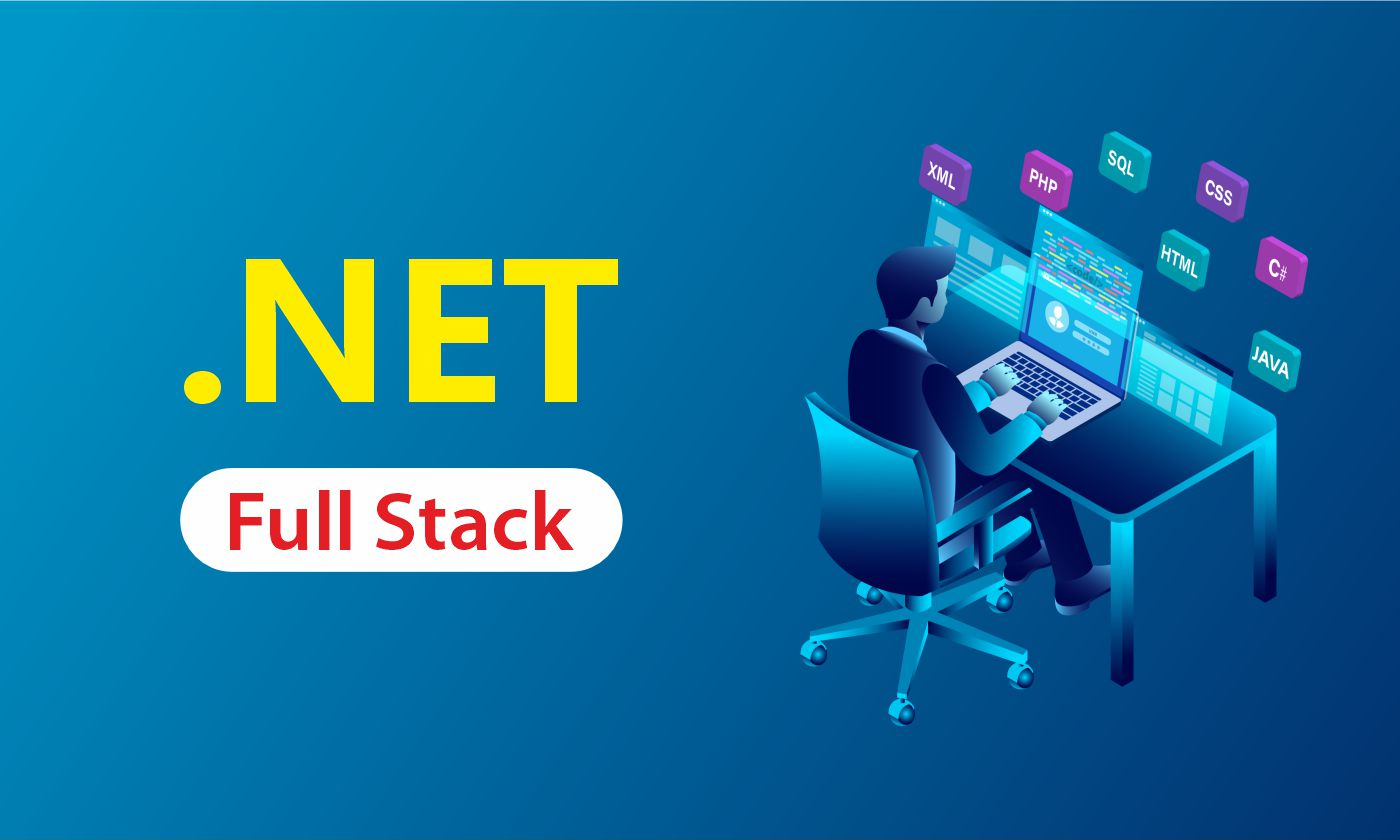
Full Stack Dot NET means learning complete web application development using Microsoft technologies. A full stack developer understands both the frontend and backend parts of an application.
The frontend is what users see. It includes web pages, forms, buttons, dashboards, and user interactions. The backend handles business logic, data processing, security, APIs, and database communication.
A Full Stack Dot NET learner usually studies:
This combination helps students understand how a complete software application works. It is useful for freshers because companies prefer candidates who can explain the full flow of a project.
Why Dot NET Is Still Important for Software Careers
Some students think Dot NET is an old technology. That is not correct. Modern Dot NET is widely used for web applications, APIs, enterprise systems, cloud applications, and secure backend development.
The dot net framework and modern .NET ecosystem are trusted because they support stable, secure, and scalable application development. Microsoft announced .NET 10 as a Long Term Support release, supported until November 2028. This gives companies confidence to continue building and upgrading applications using Dot NET technologies.
Many businesses depend on dot net development services for internal portals, customer management systems, finance applications, healthcare platforms, education software, and enterprise tools. This creates career opportunities for students who learn Dot NET practically.
Why Freshers Need a Career Roadmap
Random learning creates confusion. A student may learn C# from one source, SQL from another source, and ASP.NET from another place. But without a roadmap, they may not know how these skills connect.
A proper Full Stack Dot NET career roadmap helps students understand what to learn first, what to practice next, and how to prepare for interviews.
A roadmap gives clarity in five important areas:
This is why a structured dot net development course is more useful than random self-learning. It organizes the journey from beginner level to placement preparation.
Step 1: Build Strong C# Programming Skills
C# is the foundation of Dot NET development. Students should not rush through this stage. If programming basics are weak, backend development becomes difficult later.
Freshers should focus on variables, data types, operators, conditions, loops, methods, arrays, strings, collections, exception handling, classes, objects, inheritance, polymorphism, abstraction, and encapsulation.
Recruiters often test these basics because they show whether the candidate can think logically. A fresher who understands C# well can learn ASP.NET Core more confidently.
Students should practice small programs daily. They should also understand why object-oriented programming is used in real applications. This helps them answer interview questions with clarity.
Step 2: Learn Frontend Development Basics
A Full Stack Dot NET developer should understand frontend development. Students do not need to become advanced UI designers in the beginning, but they should know how web pages are created.
Important frontend skills include HTML, CSS, JavaScript, forms, tables, buttons, validation, responsive layouts, and basic DOM manipulation.
These skills help students design user interfaces for projects. For example, in a student management system, the learner should know how to create forms for adding student details, updating records, and displaying data.
Frontend knowledge also helps during interviews because recruiters may ask how the user sends data to the backend and how the application displays results.
Step 3: Learn SQL Server and Database Concepts
Database knowledge is very important for Dot NET developers. Most real applications store and retrieve data. Without SQL knowledge, students cannot build strong projects.
Freshers should learn tables, primary keys, foreign keys, joins, constraints, stored procedures, views, relationships, and CRUD operations.
They should also practice writing queries. Recruiters often ask SQL questions because databases are part of almost every business application.
A student who can write queries and explain database design has a better chance of performing well in interviews. This is especially important for project explanation.
Step 4: Learn ASP.NET Core and MVC
After C#, frontend, and SQL basics, students should move to ASP.NET Core. This is where they start building real web applications.
ASP.NET Core helps developers create scalable and secure applications. MVC helps organize code into Models, Views, and Controllers. This structure makes applications easier to manage.
Students should understand routing, controllers, views, models, validation, middleware, dependency injection, and application configuration.
This stage is very important because it connects programming knowledge with real web development. Students begin to understand how user requests are handled and how responses are generated.
Step 5: Learn Web API Development
Modern applications often use APIs. Web APIs allow different systems to communicate with each other. For example, a frontend application may call an API to get user details, product data, or payment status.
Students should learn REST API concepts, HTTP methods, request and response flow, JSON, status codes, API testing, and basic security.
Web API knowledge is useful for backend development and full stack roles. It also helps students understand how real applications are built in companies.
Recruiters often ask freshers to explain API flow. A student who can explain GET, POST, PUT, DELETE, request body, response data, and database connection will appear more job-ready.
Step 6: Learn Entity Framework
Entity Framework helps Dot NET applications communicate with databases using object-oriented programming. It reduces manual database code and makes application development easier.
Students should learn models, DbContext, migrations, relationships, LINQ queries, and database operations using Entity Framework.
This skill is important because many real-time Dot NET projects use Entity Framework for database handling. It also helps students write cleaner and more organized code.
Step 7: Build Real-Time Projects
Projects are one of the strongest parts of placement preparation. A certificate may show that a student completed training, but a project shows practical ability.
Good Full Stack Dot NET projects include:
Student Management System: This project helps students practice forms, CRUD operations, validation, database connectivity, and admin dashboards.
Job Portal Application: This project is useful for learning candidate registration, recruiter login, job posting, resume upload, and application tracking.
Inventory Management System: This helps students understand product records, stock updates, supplier details, sales entries, and reports.
Online Course Management System: This project includes course listing, student enrollment, login, admin control, and payment flow basics.
Employee Management Portal: This helps learners understand employee records, attendance, leave requests, role-based access, and reporting.
Students should not simply copy projects. They should understand every module, table, form, controller, API, and database operation. Interviewers can easily identify whether a project is genuine or copied.
Step 8: Learn Advanced Dot NET Skills
After basic project development, students should move toward advanced dot net skills. These skills help them stand out in interviews and prepare for long-term growth.
Important advanced skills include dependency injection, middleware, JWT authentication, repository pattern, clean architecture basics, API security, logging, exception handling, performance improvement, microservices basics, and cloud deployment awareness.
Freshers may not be expected to master everything, but they should understand the purpose of these concepts. This shows that they are serious about career growth.
Step 9: Prepare Resume and GitHub Portfolio
A good resume is not just a list of skills. It should clearly show what the student can do.
Freshers should include technical skills, projects, tools used, database knowledge, APIs, and internship or training details. Project descriptions should be short, clear, and practical.
Instead of writing generic lines, students should mention what the project does, which modules they built, and which technologies were used.
A GitHub portfolio also helps. It allows recruiters to see project code and development practice. Even simple projects can create a strong impression if they are clean, structured, and properly explained.
Step 10: Placement Preparation and Interview Practice
Technical learning alone is not enough. Students must prepare for interviews from the beginning.
A good Placement Assistance Program helps students with resume preparation, mock interviews, technical questions, HR questions, project explanation, and confidence building.
This is where career placement services become valuable. Freshers often do not know how to present their skills. They may have learned concepts but still feel nervous in interviews.
Mock interviews help students understand their weak areas. Resume guidance helps them avoid mistakes. Project explanation practice helps them answer confidently.
AI is also changing hiring. Companies are becoming more selective, and many are focusing on flexible staffing, automation-supported teams, and skills that create business value. This makes placement preparation more important than ever.
What Recruiters Actually Test
Recruiters do not expect freshers to know everything. But they expect clarity, honesty, and practical understanding.
They usually test:
A fresher should be able to explain how the project works from login to database operations. They should also explain what problems they solved and what improvements they can make.
Common Mistakes Freshers Should Avoid
Many students fail interviews because they prepare in the wrong way. They memorize answers but do not practice. They add skills to resumes without understanding them. They build copied projects and cannot explain them.
Some students ignore SQL. Some skip frontend basics. Some do not attend mock interviews. These mistakes reduce confidence during placement drives.
Freshers should focus on daily practice, project clarity, interview preparation, and communication improvement. They should prepare like job-ready candidates, not just course learners.
Online Training and Classroom Training Options
Students can choose classroom training or dotnet online training based on their schedule and learning style.
Online training is useful for learners who want flexibility. They can attend from home, revise recordings, and practice after class. Classroom training is useful for learners who prefer direct interaction, labs, and face-to-face doubt clarification.
The mode is less important than the quality of training. A good course should include practical assignments, trainer support, projects, doubt clarification, and placement guidance.
How NareshIT Supports Full Stack Dot NET Learners
Naresh i Technologies provides structured IT training with experienced real-time trainers, practical learning, mentor support, digital labs, and placement-focused preparation.
For Full Stack Dot NET learners, this means they can learn concepts step by step, practice real-time scenarios, build projects, clarify doubts, and prepare for interviews.
The goal is not only syllabus completion. The goal is to help students move toward job readiness with confidence and clarity.
FAQs
1. Is Full Stack Dot NET good for freshers?
Yes. Full Stack Dot NET is useful for freshers because it covers frontend, backend, database, APIs, and project development.
2. What should I learn first in Dot NET?
Start with C# programming, then learn SQL Server, frontend basics, ASP.NET Core, MVC, Web API, Entity Framework, and projects.
3. Is a dot net development course useful for placement preparation?
Yes. A structured dot net development course helps students learn practical skills, build projects, prepare resumes, and attend interviews confidently.
4. What is the role of a Placement Assistance Program?
A Placement Assistance Program supports students with resume building, mock interviews, technical preparation, HR guidance, and job-related support.
5. Can I learn Dot NET through online training?
Yes. Dotnet online training is useful when it includes live classes, recordings, assignments, projects, doubt support, and placement preparation.
6. What projects are best for Full Stack Dot NET freshers?
Student management systems, job portals, inventory systems, employee portals, and online course management systems are good projects.
7. Why should I learn advanced dot net skills?
Advanced Dot NET skills help learners understand secure APIs, architecture, clean coding, performance, and enterprise application development.
Conclusion
A Full Stack Dot NET career roadmap gives students a clear path from learning to job preparation. It helps freshers understand programming, frontend development, backend logic, databases, APIs, projects, and interview preparation.
In today’s competitive IT job market, students need more than theory. They need practical skills, real projects, resume strength, and placement confidence.
A structured dot net training program with placement assistance can help learners move step by step toward software development careers.
CTA
Start your Full Stack Dot NET journey with Naresh i Technologies. Learn from real-time trainers, build practical projects, prepare for interviews, and move closer to your first software development job.
 +91 8179191999

 +91
8179191999
+91
8179191999

.jpg)










.png)