Completing a programming course is one thing. Getting hired as a software developer is another. Many freshers understand Java, Python, or C# but struggle when companies ask them to build applications, solve coding problems, or explain real projects.
This gap between learning and employment is why Full Stack Development Training with practical projects and placement assistance matters. It helps learners develop technical abilities while preparing for interviews and workplace expectations.

Most beginners start by learning programming languages, databases, and frameworks separately. However, software companies expect developers to connect these technologies and build working applications.
A student might know SQL queries but struggle to integrate a database with a backend application. Similarly, understanding JavaScript does not automatically mean someone can create an interactive website.
A structured Full Stack Developer Course addresses these challenges through practical assignments, application development, debugging, and project implementation.
|
Classroom Learning |
Job-Oriented Training |
|
Learning programming concepts |
Applying concepts to projects |
|
Practicing individual programs |
Building complete applications |
|
Understanding database queries |
Integrating databases with APIs |
|
Completing assessments |
Solving development problems |
|
Learning technical subjects |
Preparing for recruitment |
Java is widely used for enterprise applications, backend services, and business software.
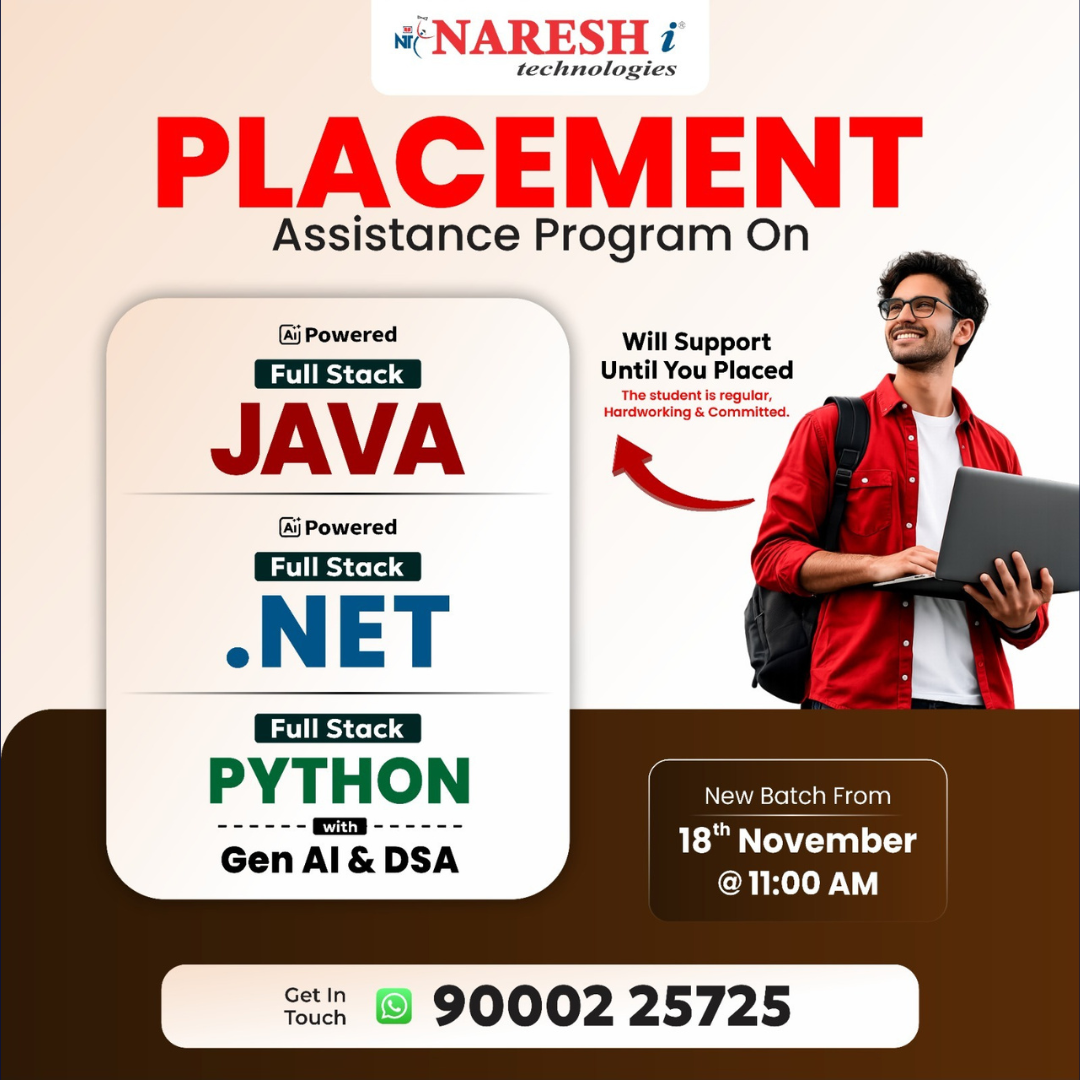
A Full Stack Java Placement Assistance Program combines programming education with practical development experience and career preparation.
A comprehensive Full-Stack Java Course generally covers:
For example, students can develop an online shopping application where customers register, browse products, and place orders. Completing this project teaches frontend development, backend processing, API communication, and database management.
Such experience helps candidates explain their technical knowledge during interviews.
.NET Developer Training provides another pathway into software development, particularly for learners interested in Microsoft's technology ecosystem.
A typical .NET learning path includes C#, ASP.NET Core, SQL Server, Entity Framework Core, REST APIs, and frontend technologies.
Consider an employee management application. The frontend displays employee records, ASP.NET Core handles business operations, and SQL Server stores information.
Building this application helps learners understand how different software components interact.
Both Java and .NET can prepare students for backend and full stack development roles. Choosing between them depends on career interests and the technology requirements of employers.
Technical skills are essential, but recruitment preparation is equally important.
Placement assistance can help students understand hiring procedures and identify areas requiring improvement.
Common support activities include:
Placement assistance improves preparation but does not guarantee employment. Hiring decisions depend on individual performance, eligibility, and available opportunities.
Students exploring Full Stack Developer Jobs often feel confused about selecting a technology.
|
Technology |
Common Frameworks |
Typical Applications |
|
Full Stack Java |
Spring Boot, React |
Enterprise applications |
|
Full Stack .NET |
ASP.NET Core, Angular |
Business software |
|
Full Stack Python |
Django, FastAPI, React |
Web applications and APIs |
Java is suitable for learners interested in enterprise development. .NET is useful for building applications within Microsoft's ecosystem. Full Stack Python can appeal to beginners interested in web development, automation, and Python-based applications.
Each technology offers opportunities when supported by strong programming skills and meaningful projects.
Beginners frequently ask, how do I become a full stack developer without previous programming experience?
Start with one programming language and build a solid foundation.
Next, learn HTML, CSS, JavaScript, backend frameworks, databases, and API development. Practice Git and GitHub while developing small applications.
Gradually move toward complete projects involving authentication, database operations, and deployment.
Anyone researching how to become a full stack developer from scratch should prioritize consistent practice over learning multiple technologies simultaneously.
A full stack web development course provides structure, while independent coding develops confidence.
Recruiters hiring junior developers generally evaluate programming fundamentals, SQL, problem-solving, API development, debugging, and communication.
They may also ask candidates to explain their projects or complete practical coding assessments.
Students completing full stack developer training should maintain GitHub repositories, prepare a focused resume, and practice interview questions regularly.
The objective is to demonstrate what they can build, not simply list technologies they have studied.
Yes. Freshers can apply for entry-level positions after developing relevant technical skills, projects, and interview readiness. Selection depends on employer requirements.
It generally combines Java development training with practical projects, resume preparation, interview practice, and career guidance.
Yes. Beginners can start with C# fundamentals before learning ASP.NET Core, databases, APIs, and application development.
Both are suitable. Java supports enterprise development, while Python is commonly used for web applications, APIs, and automation.
No. Training and placement assistance support career preparation, but employment depends on technical ability, interviews, eligibility, and hiring opportunities.

Bridging the gap between training and employment requires practical experience, consistent coding practice, and structured interview preparation.
Java and .NET full stack training can help learners build applications, strengthen technical knowledge, and understand workplace expectations.
With meaningful projects and appropriate career support, freshers can approach software development opportunities with greater confidence.
Discussion Question: What challenges you most when preparing for an IT job: coding, projects, or technical interviews?
 +91 8179191999

 +91
8179191999