
.png)
Next Batch : Invalid Date
Artificial Intelligence often feels like magic.
You input data, and the system predicts outcomes, recognizes images, understands language, and even makes decisions. For many learners, this process appears to be driven entirely by machine learning models and powerful libraries.
But beneath every intelligent system lies a deeper layer that makes everything possible.
That layer is algorithms.
Algorithms are the logic, the structure, and the decision-making engine that powers every AI system. Without them, machine learning models would not learn, predictions would not happen, and intelligent systems would not exist.
If data is the fuel of AI, then algorithms are the engine that turns that fuel into meaningful results.
This blog explores how algorithms drive machine learning and AI models, why they are critical, and how understanding them can transform your journey in artificial intelligence.
An algorithm is a clear sequence of steps or rules used to solve a problem or complete a task.
In AI and machine learning, algorithms are used to:
Learn patterns from data
Make predictions
Optimize results
Improve performance over time
Algorithms define how data is processed, how models are trained, and how outputs are generated.
Without algorithms, AI systems would simply store data without any intelligence.
Machine learning is essentially a collection of algorithms that learn from data.
Each machine learning model is built using one or more algorithms that determine how the system behaves.
Key Functions of Algorithms in ML
Transform raw data into usable formats
Identify patterns and relationships
Optimize model performance
Reduce errors over time
Algorithms are responsible for turning data into knowledge.
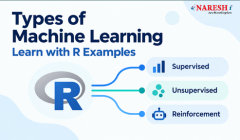
These algorithms learn from labeled data.
They are used for:
Classification
Regression
Examples include decision trees and linear regression.
These algorithms work with unlabeled data.
They are used for:
Clustering
Pattern detection
They help discover hidden structures in data.
These algorithms learn through interaction.
They improve performance by:
Receiving feedback
Adjusting actions
They are widely used in robotics and gaming.
These algorithms improve model performance.
They help:
Minimize errors
Adjust parameters
Improve accuracy
They are at the core of training machine learning models.
Before training a model, data must be processed.
Algorithms help:
Clean data
Organize data
Transform data
Efficient preprocessing improves model accuracy.
Algorithms identify patterns in data.
They help systems:
Detect trends
Recognize similarities
Understand relationships
This is the foundation of AI intelligence.
AI systems use algorithms to make decisions.
Examples include:
Recommending products
Detecting fraud
Predicting outcomes
Algorithms define how decisions are made.
Machine learning models improve over time.
Algorithms enable:
Learning from new data
Updating predictions
Improving accuracy
Algorithms analyze user behavior and suggest relevant content.
They process large datasets efficiently to deliver personalized experiences.
Algorithms enable systems to understand and process human language.
They help in:
Text analysis
Sentiment detection
Language translation
Algorithms process image data and recognize patterns.
They are used in:
Face recognition
Object detection
Medical imaging
Algorithms analyze transaction patterns to identify suspicious activity.
They enable real-time alerts and improve security.
Algorithms guide decision-making in systems like self-driving cars.
They help in:
Pathfinding
Object detection
Real-time decision-making
Explosion of Data
Modern systems handle massive datasets.
Efficient algorithms are required to process this data quickly.
Need for Real-Time Processing
Applications demand instant responses.
Algorithms ensure fast decision-making.
Increasing System Complexity
AI systems are becoming more advanced.
Algorithms help manage complexity and improve efficiency.
Competitive Advantage
Companies seek engineers who understand algorithms deeply.
This skill differentiates strong candidates from average ones.
Ignoring Algorithm Fundamentals
Many learners focus only on tools and frameworks.
Without understanding algorithms, growth is limited.
Memorizing Instead of Understanding
Algorithms should be understood, not memorized.
Lack of Practice
Regular problem-solving is essential.
Avoiding Complex Problems
Challenging problems improve skills and confidence.
Start with Basics
Understand simple algorithms like searching and sorting.
For structured learning and expert guidance, NareshIT offers comprehensive algorithm and data structure courses designed to build strong problem-solving foundations for AI.
Learn Data Structures
Algorithms work with data structures.
Practice Regularly
Solve problems consistently.
Apply in Projects
Use algorithms in real-world AI applications.
Better Problem-Solving Skills
You can solve complex challenges efficiently.
Improved System Design
You can build scalable and efficient systems.
Higher Job Opportunities
Companies value strong algorithmic thinking.
Long-Term Growth
Algorithm knowledge helps you adapt to new technologies.
To advance your career in AI with hands-on training and mentorship, NareshIT provides industry-aligned programs that integrate algorithm fundamentals with practical AI applications.
As AI continues to evolve:
Data volumes will increase
Systems will become more complex
Real-time processing will become essential
Algorithms will remain the core of intelligent systems.
Engineers who master algorithms will lead the future of AI.
Algorithms are not just a technical concept. They are the foundation of intelligence in machines.
They define how systems learn, how they make decisions, and how they improve over time.
If you want to build a strong career in AI, understanding algorithms is not optional. It is essential.
They give you the ability to move beyond using tools and start building systems that are efficient, scalable, and impactful.
Algorithms are step-by-step instructions that enable systems to process data and make decisions.
They help models learn patterns, optimize performance, and improve accuracy.
No, algorithms are essential for any AI system to function.
They become easier with practice and understanding.
It typically takes 3–6 months with consistent practice.
Yes, algorithm knowledge is a key evaluation factor.
There is no single algorithm. Different algorithms are used for different tasks.
They optimize data processing and reduce computational complexity.
It is best to learn them alongside programming.
It improves problem-solving and helps build efficient systems.
 +91 8179191999

 +91
8179191999
+91
8179191999






.png)




.png)
.png)


.png)